melissa
 Consider how ancient wisdom traditions meet modern consciousness exploration—an unlikely intersection that challenges our assumptions about spirituality and substance. Theosophy, the 19th-century philosophical movement founded by Helena Blavatsky, proposed universal truths underlying all religions and advocated disciplined spiritual development through meditation, ethical living, and expanded awareness. You can buy THCA vapes here. Today, Delta-9 THC vape cartridges represent a contemporary method of altering consciousness, raising provocative questions: Would theosophists view cannabis as a spiritual tool or a distraction from authentic inner work?
Examine theosophical texts on consciousness carefully—they emphasize direct mystical experience while warning against artificial stimulation that might confuse sensory alterations with genuine spiritual insight. Research the concept of the “astral plane” in theosophical literature, which describes subtle dimensions of reality accessible through disciplined practice rather than external substances. Investigate historical perspectives within various wisdom traditions on plant medicines, recognizing that indigenous cultures often integrated sacred plants within structured ceremonial contexts—vastly different from casual recreational use.
Reflect honestly on your intentions when combining philosophical inquiry with consciousness-altering substances. Are you seeking shortcuts to experiences that traditionally require sustained effort, or exploring genuine questions about the nature of mind and reality? This intersection invites dialogue without easy answers, requiring us to balance openness to diverse paths with critical discernment about what truly supports spiritual growth versus what merely simulates it.
Understanding Delta-9 THC Vape Cartridges: The Modern Reality
What Makes Delta-9 Different
Delta-9 tetrahydrocannabinol, commonly known as Delta-9 THC, stands as the primary psychoactive compound found naturally in cannabis plants. This molecule interacts with our body’s endocannabinoid system, creating the characteristic effects associated with cannabis use—altered perception, relaxation, and shifts in consciousness that have intrigued spiritual seekers across cultures for millennia.
Vape cartridges represent a modern delivery method that efficiently converts concentrated Delta-9 THC oil into vapor through controlled heating. Unlike traditional methods, vaping offers precise dosing and rapid onset, typically within minutes. This efficiency matters for those approaching cannabis with intentionality rather than recreation.
From a theosophical perspective, understanding the mechanism becomes important. We’re not discussing mystical properties, but rather a specific chemical interaction with our nervous system. This clarity helps distinguish between the substance itself and the consciousness exploring it—a crucial distinction when considering whether external substances can genuinely facilitate spiritual development or merely alter brain chemistry temporarily. The conversation invites thoughtful examination rather than easy answers.
The Spiritual Seeking Behind Cannabis Use
For centuries, seekers across cultures have explored altered states of consciousness as gateways to deeper understanding. Today, many turn to cannabis—particularly convenient forms like Delta-9 THC vape cartridges—as tools for this inner exploration.
What draws spiritual practitioners to cannabis? Many report that THC creates mental space for meditation, quieting the constant chatter of everyday thought. Others describe heightened sensory awareness that feels like glimpsing reality’s interconnected nature—a core theosophical principle. Some find that cannabis helps them access what Theosophists might call the “higher self,” that aspect of consciousness beyond ordinary ego-bound awareness.
The modern vaping method offers precise dosing and discretion, allowing contemplative use rather than recreational excess. Users often approach these experiences ritually, setting intentions and creating sacred space—practices that align with traditional spiritual disciplines. Understanding the spiritual aspects of vaping helps contextualize why this particular form resonates with contemporary seekers.
Yet this path isn’t without questions. Does relying on external substances truly advance inner development? Can chemically-induced experiences generate genuine spiritual growth? These tensions deserve honest exploration as we consider cannabis through a theosophical lens.
Theosophy’s View on Consciousness and Altered States
The Path to Higher Consciousness in Theosophical Thought
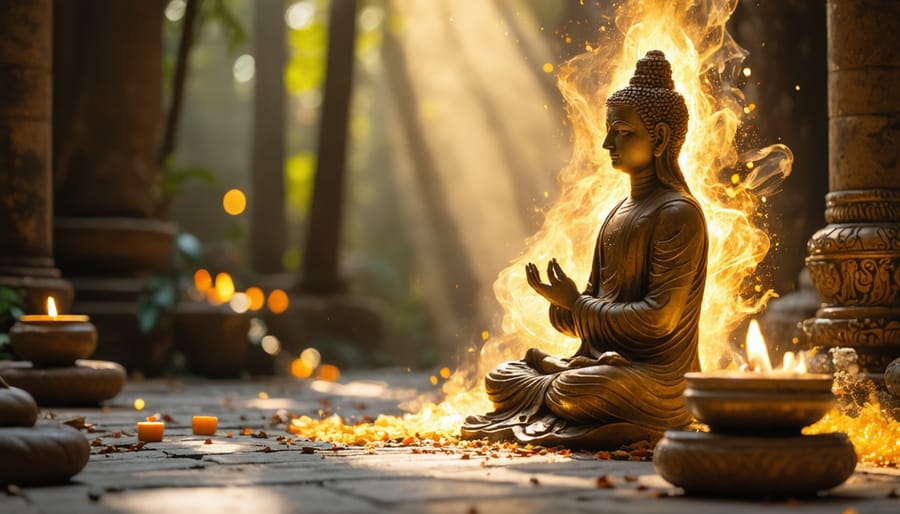
Helena Blavatsky and other theosophical pioneers emphasized that genuine spiritual evolution requires consistent inner work, not shortcuts. According to theosophical teachings, the journey toward higher consciousness unfolds through disciplined meditation, ethical living, and the gradual refinement of one’s awareness. This path isn’t about achieving sudden enlightenment through external means, but rather cultivating what Blavatsky called the “inner eye”—a developed spiritual perception that emerges from dedicated practice.
The theosophical approach views consciousness as multidimensional, with various layers beyond our ordinary waking state. However, accessing these higher states requires training the mind to remain clear, focused, and receptive. Meditation practices within theosophy aim to quiet the mental chatter and create space for deeper wisdom to emerge naturally. This process respects the individual’s own inner development timeline rather than forcing experiences artificially.
Blavatsky cautioned against relying on substances or external tools for spiritual advancement, arguing that authentic transformation must originate from within. She believed that shortcuts could provide temporary glimpses but wouldn’t build the stable foundation necessary for sustained spiritual growth. The goal wasn’t merely to experience altered states, but to develop lasting qualities like compassion, wisdom, and self-mastery.
This perspective invites us to consider what we truly seek when exploring consciousness—fleeting experiences or genuine transformation?
Historical Perspectives: What Theosophical Leaders Said About Intoxicants
The founders and early leaders of the theosophical movement offered clear perspectives on substances that alter consciousness. Helena Blavatsky, theosophy’s principal founder, strongly cautioned against alcohol and drugs, viewing them as obstacles to spiritual development. She wrote that such substances clouded the subtle perceptions needed for genuine spiritual insight, creating illusions rather than illumination.
C.W. Leadbeater echoed these concerns, explaining that intoxicants damaged the “etheric double”—the energy body connecting physical and spiritual dimensions. He believed these substances created tears or distortions in the aura, making practitioners vulnerable to lower astral influences rather than higher spiritual contact.
Annie Besant, who led the Theosophical Society for decades, emphasized self-mastery as essential to spiritual progress. She argued that relying on external substances for altered states contradicted theosophy’s core teaching: that consciousness expansion must come through disciplined inner work, meditation, and ethical living.
However, it’s important to understand these historical perspectives within their context. These leaders wrote primarily about alcohol and opium—the prevalent substances of their era. They hadn’t encountered modern cannabis products, pharmaceutical developments, or contemporary research on consciousness.
Their underlying concern wasn’t moralistic judgment but practical warning: substances that diminish clarity, self-control, or discriminative wisdom interfere with the careful inner work theosophy requires. They distinguished between artificially induced states and the gradual, stable expansion of consciousness achieved through sustained spiritual practice.
The Tension Between Ancient Wisdom and Modern Shortcuts

The Case for Plant Medicine in Spiritual Practice
For thousands of years, indigenous communities across the Americas, Africa, and Asia have incorporated plant medicines into their spiritual ceremonies. Ayahuasca, peyote, cannabis, and countless other botanicals have served as bridges between ordinary consciousness and what many traditions describe as direct communion with the divine. These practices aren’t recreational—they’re sacred technologies developed through generations of careful observation and reverence.
Eastern philosophies, particularly within certain schools of Hinduism and Buddhism, have long acknowledged cannabis as a plant of consciousness. Shiva devotees in India have used cannabis in meditation for millennia, viewing it as a tool for transcending the material world—a concept that resonates deeply with theosophical teachings about higher states of awareness.
Today’s spiritual seekers often look to these established traditions when considering their own consciousness exploration. Some modern theosophists draw parallels between ancient plant medicine ceremonies and H.P. Blavatsky’s discussions of heightened perception, arguing that if indigenous wisdom-keepers found spiritual value in these practices, dismissing them entirely contradicts Theosophy’s respect for universal truth across cultures.
However, this reconciliation requires careful consideration. Context matters profoundly—a ceremonial practice guided by trained elders differs significantly from individual consumption. Modern seekers must ask themselves: Am I approaching this with the reverence, preparation, and intentionality these traditions demand? Or am I simply appropriating practices disconnected from their cultural and spiritual frameworks? The difference determines whether plant medicine becomes a genuine spiritual tool or merely another form of escapism.
The Theosophical Caution: Why Discipline Matters
Within theosophical tradition, there’s a clear teaching that resonates across cultures and spiritual lineages: authentic spiritual growth demands disciplined effort and conscious self-mastery. This perspective invites us to consider whether substance-induced experiences—including those from Delta-9 THC vapes—might actually create obstacles rather than pathways to genuine spiritual unfoldment.
The foundation of this caution rests on understanding the difference between altered consciousness and expanded consciousness. Theosophical philosophy teaches that true spiritual development involves gradually refining our perception through meditation, ethical living, and sustained inner work. These practices strengthen what Theosophy calls the “higher self”—our capacity for intuition, wisdom, and spiritual insight. In contrast, substances may temporarily shift our awareness, but this shift isn’t necessarily evolutionary or lasting.
Helena Blavatsky and subsequent theosophical teachers emphasized that karma and spiritual development unfold through conscious choices made with clarity and intention. When we rely on external substances to access altered states, we risk bypassing the inner discipline that builds spiritual strength. It’s similar to taking an elevator instead of climbing stairs—you reach a different floor, but you haven’t developed the muscles that make climbing effortless.
This doesn’t come from a place of judgment but from practical wisdom accumulated across diverse spiritual traditions. Many indigenous practices that do incorporate plant medicines do so within highly structured contexts, with extensive preparation and integration—very different from casual recreational use.
The theosophical caution asks us to consider: Are we seeking shortcuts, or are we willing to do the challenging work of genuine transformation? True spiritual awakening, from this perspective, emerges from within through patient, disciplined practice.
Questions Worth Contemplating: A Dialogue Approach
On Intention and Authenticity
Before reaching for any substance—whether cannabis, alcohol, or even caffeine—it’s worth pausing to examine our motivations. What draws us toward altered states of consciousness? Are we seeking escape from discomfort, or genuine expansion of awareness? Are we looking for shortcuts to spiritual experiences that traditionally require sustained practice and discipline?
From a theosophical perspective, intention matters profoundly. The same action can carry vastly different karmic weight depending on the consciousness behind it. Using Delta-9 THC as a recreational distraction differs fundamentally from approaching it as a contemplative tool within a broader spiritual practice.
This isn’t about judgment—communities worldwide have long integrated plant medicines into sacred traditions. Indigenous practices from the Amazon to North America demonstrate that substances can serve spiritual purposes when embedded in intention, ritual, and cultural wisdom. The question becomes: are we honoring that approach, or simply borrowing aesthetics?
Authenticity requires honest self-examination. If we claim spiritual motivations while avoiding meditation, study, or service to others, we might be deceiving ourselves. Conversely, dismissing all substance use as “unspiritual” ignores diverse cultural traditions and individual paths.
What matters is whether our choices align with our deepest commitments to growth, truth, and compassion—not merely what feels convenient or pleasurable in the moment.
On Integration and Daily Practice
A central question emerges when considering any substance-assisted spiritual exploration: does the experience become a catalyst for deeper practice, or does it replace the sustained inner work that theosophy traditionally emphasizes?
Theosophical teachings consistently point toward daily discipline—meditation, study, self-observation, and ethical living—as the foundation for genuine spiritual development. These practices cultivate what H.P. Blavatsky called “the growth of the inner faculties,” which unfold gradually through consistent effort. From this perspective, any temporary experience, however profound, gains meaning only through integration into daily life.
Many practitioners across traditions have found that substance-based insights fade without grounding practices. The question isn’t whether the experience felt authentic in the moment, but whether it translates into transformed behavior, deepened compassion, or enhanced understanding over weeks and months.
Consider how different communities approach this integration. Some indigenous traditions combine plant medicines with rigorous preparation, ceremony, and ongoing mentorship. The substance becomes one element within a comprehensive spiritual framework, never isolated from community accountability and sustained practice.
For those exploring THC alongside theosophical study, honest self-assessment becomes essential: Are you cultivating regular meditation regardless of substance use? Does your practice deepen your engagement with theosophical principles like compassion and wisdom? Integration requires choosing practices that endure beyond any single experience.
Global Perspectives: How Different Cultures Bridge This Gap
The relationship between plant medicines and spiritual development transcends any single tradition, and examining how different cultures approach this intersection enriches our understanding of both theosophy and modern consciousness exploration.
In Indigenous Amazonian traditions, ayahuasca ceremonies are guided by a framework that views plant spirits as teachers, not mere substances. The curanderos emphasize preparation, intention, and integration—concepts that challenge the Western idea of substances as simply chemical compounds affecting brain chemistry. Here, the plant itself is considered a conscious entity capable of transmitting wisdom, a perspective that resonates with theosophical views of consciousness pervading all nature.
Hindu traditions offer the concept of soma, a sacred substance mentioned in the Vedas that facilitated communion with the divine. While soma’s exact identity remains debated, the tradition demonstrates a nuanced understanding: the substance itself wasn’t worshipped, but rather seen as a tool requiring proper context, preparation, and spiritual development to yield genuine insight. This approach suggests that without the accompanying inner work, the substance alone produces little lasting transformation.
Buddhist perspectives, particularly from Tibetan traditions, present an interesting counterpoint. While generally discouraging intoxicants as obstacles to clear awareness, some tantric practices acknowledge that advanced practitioners might skillfully work with altered states. The emphasis, however, remains on cultivating natural clarity through meditation—suggesting that substance-induced states might offer glimpses but cannot replace dedicated practice.
West African traditions, particularly those involving iboga in Bwiti ceremonies, emphasize communal guidance and ceremonial structure. The individual’s experience is held within a collective container, with elders interpreting visions through cultural wisdom. This communal approach contrasts sharply with individualized, unsupervised use common in contemporary Western contexts.
Rastafarian traditions view cannabis as a sacrament facilitating reasoning sessions and spiritual connection, integrating it into a broader framework of lifestyle, diet, and consciousness. The plant isn’t isolated from other spiritual practices but woven into a holistic path.
These diverse perspectives share common threads: intentionality, preparation, integration, communal wisdom, and understanding substances as tools within broader spiritual frameworks rather than shortcuts to enlightenment. They invite us to consider whether modern, isolated consumption of substances like Delta-9 THC honors these deeper principles or merely appropriates surface elements without their transformative context.

Practical Considerations for the Spiritual Seeker
For those considering or currently exploring consciousness-altering substances within a spiritual framework, several practical considerations deserve thoughtful attention.
**Harm Reduction First**
If you choose to explore Delta-9 THC, prioritize safety. Start with minimal doses, ensure you’re in a secure environment, and never operate vehicles or machinery. Source products from reputable, legally compliant vendors with lab testing results. Understanding your local laws is essential—legal status varies dramatically across jurisdictions, and ignorance provides no protection. Consider your personal health history, particularly regarding anxiety, depression, or family history of mental health conditions, as THC can exacerbate certain vulnerabilities.
**Discernment and Honest Self-Assessment**
The most critical question isn’t whether substances are “theosophically acceptable” but rather: *Why am I drawn to this practice?* Are you seeking genuine spiritual insight, or avoiding uncomfortable inner work? Are you replacing consistent meditation and mindful spiritual practices with chemical shortcuts? Spiritual maturity involves brutal honesty with ourselves. Some find occasional cannabis use complementary to their practice; others discover it becomes a crutch or distraction.
**Multiple Paths, Equal Validity**
Whether you incorporate cannabis into your spiritual practice, reject it entirely, or remain undecided, your path holds validity. Theosophy embraces diverse approaches to spiritual development. What matters is maintaining ethical conduct, compassion toward others, and dedication to genuine self-knowledge. Those who choose abstinence shouldn’t judge those who experiment; those who experiment shouldn’t assume their way is superior.
**Community and Dialogue**
Seek out trusted spiritual mentors or communities where these conversations happen openly without judgment. Isolation breeds self-deception. Share experiences honestly, listen to diverse perspectives, and remember that wisdom emerges through collective dialogue rather than individual certainty.
Ultimately, spiritual integrity transcends any substance or technique. It lives in our daily choices, our treatment of others, and our commitment to truth—with or without THC vapes in the picture.
Ultimately, this exploration offers no definitive verdict—and perhaps that’s precisely its value. The intersection of theosophical philosophy and contemporary cannabis practices invites us into the space between certainty and discovery, where the most meaningful spiritual work often occurs. Rather than seeking prescriptive answers about whether Delta-9 THC vape cartridges align with spiritual development, we benefit more from examining the quality of our inquiry itself.
The diverse perspectives within theosophy remind us that authentic spiritual growth springs from individual sincerity, consistent self-examination, and committed practice—not from any external substance, tool, or technique. Whether one views cannabis as potentially supportive, irrelevant, or counterproductive to spiritual work, the determining factor remains the consciousness we bring to our choices and the honesty with which we observe their effects.
We encourage you to continue this conversation within your communities. Share your experiences, listen to differing viewpoints, and maintain the spirit of open inquiry that characterizes theosophical tradition at its best. What has your personal discernment revealed? How do various practices and substances impact your capacity for compassion, clarity, and service?
These questions belong to all of us, transcending cultural backgrounds and spiritual orientations. By engaging them together with respect and curiosity, we honor both ancient wisdom and contemporary experience. Your reflections matter—please share them, and let’s continue exploring these complex territories with the thoughtfulness they deserve.