melissa
The philosophy of inclusion within theosophical thought is the principle that universal wisdom belongs to all humanity and reveals itself through the diverse experiences, cultures, and perspectives of every individual. It rejects the notion that spiritual truth is the exclusive domain of any single tradition, race, or background, instead affirming that the journey toward understanding requires the contributions of many voices.
This matters because inclusion isn’t simply about being welcoming or polite. In theosophical communities, it determines whether we’re genuinely exploring the common threads of human spiritual experience or merely reinforcing familiar assumptions. The Theosophical Society, from its founding in 1875, positioned itself as a worldwide movement dedicated to forming a nucleus of universal brotherhood without distinction of race, creed, sex, caste, or color. That first object remains its cornerstone, and understanding the philosophy behind it helps us move beyond token diversity toward genuine transformation.
What does inclusion actually look like in practice? How do we hold space for competing worldviews without losing coherence? These questions become urgent when theosophical groups gather seekers from Christian, Hindu, Buddhist, Indigenous, and secular backgrounds, each bringing their own vocabulary and sacred touchstones. The philosophy of inclusion offers a framework for navigating this complexity, one rooted in the recognition that every tradition carries fragments of a larger truth no single path can fully grasp alone.
This article explores how inclusion functions as both a spiritual principle and a practical commitment. We’ll examine the core idea itself, the mechanisms that make it work in real communities, the dimensions it touches (from language and ritual to leadership and study), and how theosophical organizations apply it today. Along the way, we’ll address the tensions that arise when openness meets the need for shared understanding.
What a Philosophy of Inclusion Means in Theosophical Context
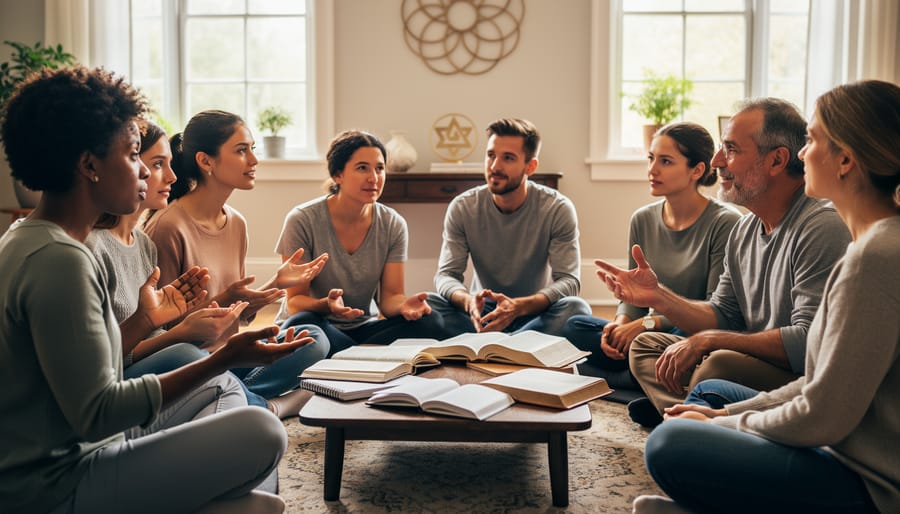
A philosophy of inclusion in theosophical context means actively inviting diverse perspectives, cultural backgrounds, and lived experiences into the exploration of spiritual truth, not as a political gesture, but as recognition that wisdom emerges through genuine dialogue across differences. This goes beyond passively allowing people into study groups or meetings. It requires creating conditions where participants feel their unique insights genuinely matter, where questions rooted in non-Western traditions carry equal weight to European references, and where someone’s direct mystical experience holds value alongside scholarly interpretation.
Inclusion differs fundamentally from tolerance. Tolerance suggests putting up with difference, enduring what makes us uncomfortable until we can return to familiar ground. True inclusion, by contrast, assumes that engaging with unfamiliar perspectives, whether shaped by Indigenous cosmologies, Buddhist meditation practice, or lived experiences of marginalization, enriches everyone’s understanding of universal principles. When someone brings Plato’s influence into conversation alongside Vedantic philosophy or Sufi poetry, the resulting dialogue reveals dimensions of truth that no single tradition fully captures alone.
- Inclusivity
- The practice of structuring theosophical spaces so people from varied backgrounds can participate fully, not just attend. This means considering language, format, time zones, and cultural assumptions in how we organize dialogue.
- Engagement
- Active, reciprocal participation where members contribute their perspectives and challenge assumptions respectfully, rather than passively receiving instruction from established authorities.
- Universalism
- The theosophical principle that fundamental truths about consciousness, unity, and spiritual development appear across all cultures and traditions, even when expressed through different symbols and practices.
- Brotherhood
- The foundational commitment to human solidarity that transcends race, creed, sex, caste, or color, the first object of the Theosophical Society and the ethical ground for inclusive practice.
- Dialogue
- Genuine exchange where participants listen to understand, not merely to respond or correct, allowing collective insight to emerge from the interplay of different viewpoints.
- Cultural Humility
- The ongoing practice of recognizing one’s own cultural conditioning and remaining open to learning from traditions outside one’s familiar reference points.
This framework rests on a core theosophical conviction: that universal brotherhood is not an abstract ideal but a lived practice requiring us to meet each other as equals in the search for wisdom. When we engage inclusively, we embody the principle that divine truth manifests through countless forms, and no single culture or lineage holds a monopoly on spiritual insight. The philosophy asks us to hold firm to theosophy’s universalist vision while remaining humble about how that vision expresses itself across the beautiful complexity of human experience.
How Inclusive Philosophy Works in Theosophical Communities
Creating Accessible Dialogue Spaces
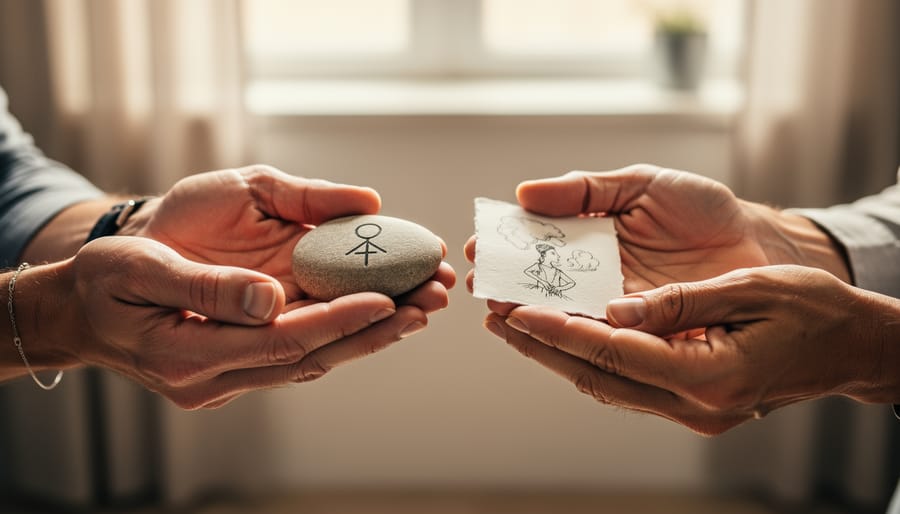
Designing accessible dialogue spaces starts with recognizing that physical meeting times, language barriers, and technological gaps often exclude participants before discussion even begins. A theosophical community committed to inclusion might schedule study groups across multiple time zones rather than defaulting to one region’s evening hours, ensuring members in Asia, Europe, and the Americas can each find a session that fits their day. This practical gesture signals that global participation matters more than convenience for the majority.
Language accessibility extends beyond translation. Communities create space for non-native English speakers by slowing discussion pace, providing written materials in advance, and welcoming clarifying questions without judgment. Some groups rotate between languages or use multilingual moderators who can bridge communication gaps in real time. The goal isn’t perfection but removing the unspoken pressure to perform fluency, which trust fosters engagement more effectively than any mission statement.
Technology choices determine who can join. A community relying solely on high-bandwidth video platforms inadvertently excludes members in regions with unstable internet. Offering audio-only options, text-based forums, or asynchronous discussion threads alongside live meetings creates multiple entry points. Format matters too: small breakout groups invite quieter voices more successfully than large assemblies where confident speakers dominate.
Cultural sensitivity in format means questioning assumptions about what inclusive dialogue looks like. Some traditions value reflective silence; others prefer spirited debate. Rotating facilitation styles and explicitly inviting different approaches to discussion helps communities move beyond one-size-fits-all models inherited from particular cultural contexts. The physical or virtual room becomes inclusive when participants shape it together rather than adapting to a fixed template.
Balancing Universal Principles with Cultural Particularity
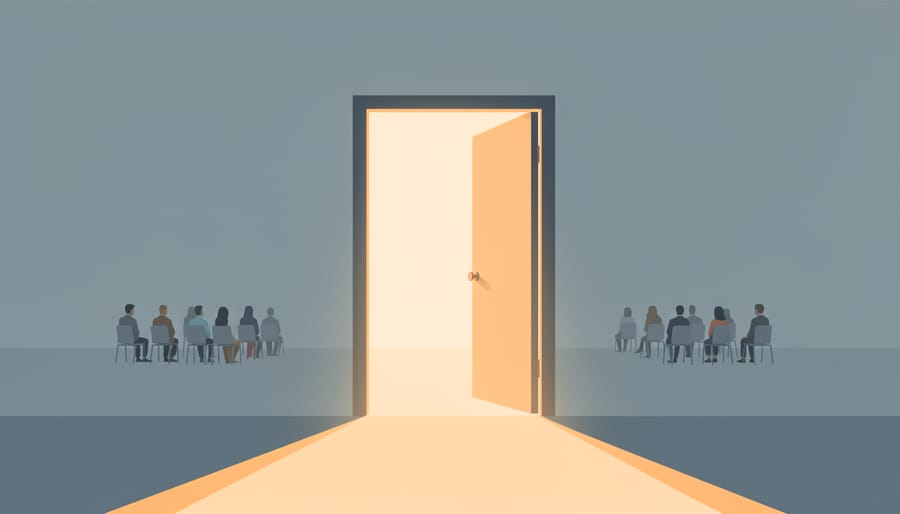
Theosophy’s foundational claim is that certain truths are universal, accessible to all people regardless of background. Yet every person encounters those truths through the particular: their language, their history, their culture’s symbolic vocabulary. A philosophy of inclusion doesn’t resolve this tension; it transforms it into productive dialogue.
The practical challenge emerges most clearly when communities discuss core concepts. Take karma. A Western member might frame it through cause-and-effect mechanics, drawing on scientific language. Someone from a Hindu background brings generations of nuanced understanding about dharma’s relationship to karmic action. A newcomer from neither tradition might hear echoes in their own culture’s ideas about consequence and moral order. All three perspectives touch the same principle, but through different doorways.
Communities navigate this by treating cultural particularity not as obstacle but as resource. Instead of translating everything into one dominant framework, historically often Western academic language, inclusive spaces let multiple frameworks coexist. A study group might explore how different wisdom traditions articulate the same theosophical idea, recognizing that each cultural lens reveals aspects others miss.
This means abandoning the notion of a single “pure” or “correct” formulation. The universal principle exists; our articulations of it are always culturally situated. When a Japanese member explains mushin in relation to theosophical consciousness, and an Indigenous participant connects it to their tradition’s understanding of presence, the community grows richer. The tension between universal and particular becomes generative rather than problematic, exactly what an inclusive philosophy enables.
Fostering Engaged Participation
Inclusive theosophical communities recognize that meaningful participation requires more than showing up. They actively create conditions where members feel safe offering their own perspectives, whether that’s a Buddhist practitioner drawing connections to dependent origination, someone with Indigenous heritage noting parallels in creation stories, or a skeptic raising genuine questions about karma. This shift happens through deliberate practices: asking open-ended questions instead of delivering monologues, building in time for response and dialogue, and treating disagreement as a resource rather than a problem.
Facilitators model this by sharing their own uncertainties and inviting correction. When a study group leader says “I’ve always understood this passage one way, but I’m curious how others see it,” they signal that knowledge is co-created, not handed down. Some communities use structured formats, rotating who leads discussions, setting aside time specifically for member-initiated topics, or creating digital platforms where contributions from anywhere carry equal weight.
The goal isn’t consensus. It’s engaged investigation where your presence changes the conversation. You’re not there to passively absorb established doctrine; you’re part of how that community understands theosophical principles in this particular moment, with these particular people and their distinct experiences.
Dimensions of an Inclusive Theosophical Approach
A philosophy of inclusion doesn’t operate along a single axis. When theosophical communities commit to welcoming diverse participants, they’re actually addressing multiple distinct dimensions of human experience and engagement. Understanding these dimensions helps clarify what inclusion actually requires, and where well-meaning communities might inadvertently create barriers even while celebrating openness on other fronts.
Intellectual Diversity: Opening Space for Multiple Interpretations
Intellectual inclusion means welcoming different interpretive frameworks and philosophical approaches to theosophical teachings. A community practicing this dimension doesn’t insist that H.P. Blavatsky’s writings must be read through a single lens or that certain conclusions are off-limits. Instead, members might approach The Secret Doctrine with backgrounds in Buddhist philosophy, Christian mysticism, scientific materialism, or indigenous wisdom traditions, and each perspective enriches the collective understanding.
This doesn’t mean abandoning discernment or declaring all interpretations equally valid. It means recognizing that people with different training, questions, and intellectual commitments can genuinely engage theosophical ideas without being forced into a predetermined reading. When a physicist and a poet sit down to discuss karma, they bring different tools to the conversation. An intellectually inclusive community creates room for both contributions rather than privileging one mode of thinking.
Cultural Diversity: Honoring Global Traditions and Contexts
Cultural inclusion acknowledges that theosophy emerged from cross-cultural dialogue and continues to take shape in varied cultural contexts around the world. The same principle might express itself through distinctly different language, imagery, and practice in Chennai, São Paulo, or Amsterdam. This dimension asks communities to question whose cultural assumptions are treated as neutral or universal, and to actively seek out voices from backgrounds underrepresented in theosophical literature and leadership.
Practically, this might mean including texts from non-Western philosophical traditions in study programs, recognizing that Western esotericism is one tributary among many. It means noticing when examples, metaphors, or meeting structures reflect only European or North American cultural norms, and consciously making space for other ways of organizing spiritual community.
The Four Core Dimensions
These components work together to create genuinely welcoming theosophical spaces:
- Intellectual diversity: Welcoming different interpretive frameworks and philosophical approaches without requiring a single correct reading of theosophical texts
- Cultural diversity: Honoring the global nature of theosophy by including voices, traditions, and practices from varied cultural backgrounds rather than defaulting to Western norms
- Experiential diversity: Valuing that people arrive through different spiritual paths, direct mystical experience, scholarly study, social justice work, or contemplative practice, each valid
- Practical accessibility: Removing concrete barriers to participation such as language, technology access, meeting times, physical space requirements, or financial costs
Each dimension addresses distinct obstacles. A community might excel at intellectual openness while inadvertently creating cultural homogeneity, or celebrate cultural diversity while remaining practically inaccessible to people without flexible schedules or reliable internet.
Experiential Diversity: Multiple Valid Paths to Understanding
Experiential inclusion recognizes that people come to theosophical ideas through vastly different routes. Some arrive after profound mystical experiences seeking frameworks for what they’ve encountered. Others approach as scholars drawn to comparative religion. Still others connect through social activism, seeing universal brotherhood as a call to justice work. Some find their way through personal crisis, others through intellectual curiosity.
An experientially inclusive community doesn’t privilege one path over others or suggest that direct spiritual experience trumps study, or vice versa. It creates space for the mystic and the academic, the activist and the contemplative, understanding that these different modes of engagement complement rather than compete with each other.
Practical Accessibility: Removing Concrete Barriers
The most overlooked dimension is often the most straightforward: making sure people can actually show up. Practical inclusion means examining the real-world obstacles preventing participation. Can someone join a study group if they work evening shifts? Is content available in languages beyond English? Do online platforms require expensive devices or high-speed internet? Are meeting spaces wheelchair accessible?
This dimension forces communities to move beyond good intentions and examine where their structures inadvertently filter out certain participants. It includes financial accessibility, whether membership fees or event costs create class barriers, and technological literacy, recognizing that not everyone navigates digital platforms with equal ease.
When communities attend to all four dimensions simultaneously, they create conditions where a wider range of people can genuinely contribute to theosophical dialogue rather than simply being tolerated at its margins.
Where Inclusive Philosophy Applies in Theosophical Work
In Study and Interpretation of Texts
Theosophical texts, from the Secret Doctrine to the Bhagavad Gita, the Voice of the Silence to commentaries by later writers, carry layers of meaning that shift depending on the reader’s vantage point. An inclusive study approach recognizes that a Western academic, a Hindu practitioner, a Latin American activist, and a Chinese philosopher may each surface different truths from the same passage. Rather than declaring one interpretation authoritative, inclusive communities encourage participants to bring their own cultural frameworks and lived experiences into conversation with the text. This means reading with inclusion invites questions like: How does this teaching resonate with Indigenous cosmologies? What would a feminist reading reveal? How do economic realities shape our understanding of karma? The text becomes a meeting ground, not a rigid monument. Disagreements aren’t resolved by appeals to a single authority but through dialogue that deepens everyone’s grasp of the principles at stake, reflecting theosophy’s own claim that truth is multifaceted and progressively revealed.
In Organizational Governance and Leadership
Governance structures reveal whether a theosophical society merely talks about inclusion or actually practices it. When leadership selection involves transparent processes that actively seek candidates from varied backgrounds, communities gain perspectives they might otherwise miss. A board composed entirely of people from one generation, culture, or socioeconomic bracket will inevitably have blind spots that limit the society’s reach and relevance.
Decision-making processes matter as much as who sits at the table. Societies that reserve time for input from newer members, create channels for feedback beyond annual meetings, and genuinely consider dissenting views demonstrate that inclusion shapes how choices get made, not just who makes them. This might mean rotating facilitation roles, offering meeting times that accommodate different time zones and work schedules, or providing translation when discussions involve members speaking various languages.
Resource distribution tells the real story. Which programs receive funding? Whose initiatives get promoted? If resources consistently flow toward long-established activities while newer voices struggle for support, the stated commitment to inclusion rings hollow. Allocating budgets to accommodate varied needs, whether for childcare during events, technology for remote participation, or materials in multiple languages, signals that the community values diverse participation enough to invest in it.
In Public Dialogue and Outreach
When a theosophical community engages the wider public, inclusion determines whether spiritual inquiry feels like an invitation or an insider’s club. Outreach grounded in inclusive philosophy avoids presenting theosophy as a fixed system requiring conversion. Instead, it frames ideas as contributions to ongoing conversations about consciousness, ethics, and meaning that span traditions.
This means meeting people where they are, using accessible language rather than specialist terminology, acknowledging shared questions across spiritual paths, and genuinely listening to how others understand concepts like karma or unity. When participating in interfaith dialogues, inclusive communities resist the temptation to position theosophy as superior or uniquely correct. They contribute specific insights while recognizing that wisdom appears in many forms.
Practically, this shapes everything from website design (is it welcoming to spiritual seekers unfamiliar with Blavatsky?) to public talks (do examples resonate across cultures?) to social media presence (does it invite questions or broadcast conclusions?). Inclusion in outreach isn’t marketing strategy, it’s the natural expression of believing that truth-seeking benefits from diverse voices rather than uniform agreement.
Common Questions About Inclusion in Theosophical Practice
When theosophical communities begin implementing inclusive practices, certain questions arise repeatedly. These concerns are worth addressing directly, because they often reflect genuine tensions rather than simple misunderstandings.
Does inclusion mean abandoning core theosophical principles?
No. Inclusion strengthens theosophical work by embodying the principle of universal brotherhood in practice, not just theory. The commitment to seeking truth welcomes diverse perspectives as potential paths to deeper understanding, rather than treating a single interpretation as final.
How do we maintain coherence while including radically different viewpoints?
Coherence comes from shared commitment to honest inquiry, not from enforcing agreement. Communities can hold space for multiple interpretations of theosophical concepts while maintaining clear boundaries around the practices and principles that define their work together.
What is the difference between inclusion and relativism?
Inclusion welcomes diverse starting points and cultural frameworks without claiming all perspectives are equally valid or useful. It means engaging seriously with different views, testing them against experience and reason, not accepting every claim uncritically.
How should communities respond to genuinely harmful or exclusive perspectives?
Inclusion does not require tolerating harm. Communities can set boundaries against racist, supremacist, or abusive viewpoints while remaining open to cultural differences and legitimate disagreement about theosophical concepts.
The fear that inclusion will dilute theosophical identity often stems from equating unity with uniformity. But the early theosophical movement itself brought together Hindus, Buddhists, Christians, and freethinkers precisely because they saw value in crossing boundaries. Contemporary inclusion continues that spirit rather than departing from it.
Disagreement poses another common challenge. Some worry that welcoming different interpretations will fragment communities or lead to endless conflict. In practice, though, inclusive dialogue tends to deepen engagement rather than splinter it. When people feel genuinely heard, they invest more energy in understanding others. The goal is not consensus on every point but a shared commitment to exploring truth together, even when that exploration leads different members in different directions.
The question of relativism deserves particular attention because it touches on theosophy’s claim to universal truths. Inclusion asks us to recognize that people approach those truths through different cultural lenses, not that truth itself is arbitrary or purely subjective. A Hindu member and a Western esotericist might describe karma using different language and examples, both contributing valid insights without one interpretation canceling the other. The philosophy of inclusion creates space for this kind of complementary understanding.
Perhaps the hardest question involves setting limits. Complete openness sounds admirable until someone uses that openness to promote hatred or exclusion. Inclusive communities must distinguish between welcoming diverse spiritual perspectives and accepting views that actively harm others or contradict the foundational commitment to human dignity. This requires discernment, not rigid rules, and communities will draw these boundaries in slightly different places based on their specific contexts and membership.
Moving Forward with Inclusive Theosophical Dialogue

A philosophy of inclusion doesn’t compromise theosophical principles, it fulfills them. Universal brotherhood, the first object of many theosophical societies, cannot be an abstract ideal divorced from the concrete work of welcoming diverse voices, honoring different cultural expressions of truth, and creating spaces where genuine dialogue replaces monologue. When we commit to inclusion as spiritual practice rather than political posturing, we acknowledge that unity doesn’t require uniformity, and that our understanding deepens precisely through encounters with perspectives we hadn’t considered.
The path forward requires both institutional reflection and individual commitment. Theosophical communities benefit from regularly examining their structures, language, and assumptions to identify unintended barriers. But inclusion also asks something of each participant: the willingness to listen when comfortable certainties are questioned, the humility to recognize that our experience of truth is partial, and the courage to engage across differences without surrendering our own understanding or demanding others surrender theirs.
This isn’t easy work. It generates friction, demands patience, and sometimes surfaces conflicts that feel easier to avoid. Yet these tensions are precisely where growth happens, both for individuals and for the theosophical movement itself. When we approach inclusion as an ongoing practice rather than a finished state, we create communities that remain alive, responsive, and genuinely committed to the vision that has animated theosophy from its beginning: that humanity’s diversity is not an obstacle to unity but its very foundation.