melissa
Existentialism is a philosophical movement that asserts existence precedes essence. In plain terms, you are not born with a predetermined purpose or nature. Instead, you create your own meaning through the choices you make, the actions you take, and the responsibility you accept for the life you build.
This isn’t abstract academic theory. It’s a lived response to one of humanity’s most pressing questions: how do we find meaning when traditional structures, whether religious, cultural, or social, no longer provide clear answers? Born from the cultural ferment of the 19th and 20th centuries, existentialism emerged as thinkers like Sartre, Camus, and Kierkegaard grappled with a modern subject forced to confront meaninglessness without the certainty of divine guidance or inherited purpose.
What makes existentialism compelling in 2026 is its refusal to offer easy comfort. It demands that we face absurdity head-on: the injustice we witness, the failures we endure, the suffering that seems random, and the mortality we cannot escape. Rather than provide a ready-made system of beliefs, existentialism hands us radical freedom and asks what we will do with it.
For those exploring spiritual and philosophical paths today, especially through a theosophical lens, existentialism offers a vital conversation partner. While theosophy speaks of universal principles and interconnected wisdom, existentialism reminds us that these principles must be chosen, embodied, and enacted by each individual. You cannot inherit authenticity. You must forge it yourself.
This philosophy was never a unified school of thought. It was, and remains, an attitude, a mood that questions inherited assumptions and invites you to think critically about how you live. Whether you’re encountering existentialism for the first time or revisiting its insights with fresh eyes, the central challenge stays the same: if no external authority defines your essence, who will you choose to become?
What Existentialism Actually Means: Core Definitions Across Traditions

At its most fundamental level, existentialism insists that human beings first exist, and only then create their own meaning and identity through the choices they make. This reversal of traditional philosophy, where essence (a predetermined nature or purpose) would normally precede existence, places radical responsibility on each individual to define who they are through action rather than accepting any fixed blueprint.
The most widely cited formulation comes from Jean-Paul Sartre, who declared that for humans, existence precedes essence. Unlike a manufactured object, a paper knife for instance, which is designed with a specific purpose before it comes into being, human beings arrive in the world without a predetermined nature. We are not born to fulfill a divine plan or embody a fixed human essence. Instead, we create ourselves through the accumulation of our choices, commitments, and actions. This means freedom is not optional, it is the unavoidable condition of being human.
French existentialism brought this idea into sharp focus during the mid-20th century, but the existentialist mood extends beyond any single tradition. At its core, existentialism foregrounds the perplexing condition of the modern subject who, in the absence of God or other absolute anchors, must contend with meaninglessness. This confrontation with absurdity, injustice, suffering, and mortality becomes the starting point for authentic existence rather than something to be explained away or denied.
- Existence precedes essence
- Humans are not created with a fixed purpose or nature. We define ourselves through our choices and actions.
- Bad faith
- Living inauthentically by denying one’s freedom and pretending one’s identity or roles are fixed. It is a form of self-deception where we flee from responsibility.
- Authenticity
- Living in full acknowledgment of one’s freedom and taking ownership of choices without hiding behind excuses, social roles, or predetermined scripts.
- Radical freedom
- The recognition that humans are fundamentally free to choose their actions and attitudes, even in constrained circumstances. This freedom comes with the weight of total responsibility.
- The absurd
- The clash between the human desire for meaning and the universe’s indifference. Confronting this absurdity honestly, rather than escaping into comforting illusions, is central to existentialist thought.
It is crucial to understand that existentialism was never a unified school of thought or movement. Rather, it emerged as an attitude or mood expressing cultural ferment across philosophy, theology, literature, and art. Some existentialists, like Sartre and Albert Camus, embraced atheism and the absence of any cosmic order. Others, such as Søren Kierkegaard and Gabriel Marcel, explored existentialist themes within religious frameworks, wrestling with faith, doubt, and the individual’s relationship to the divine.
This diversity matters because existentialism refuses to offer a single system or dogma. The relationship between existence and essence shifts depending on the thinker, culture, and context, yet the underlying conviction remains: philosophical existentialism seeks to understand the nature of human existence and the possible meanings that might be made when traditional certainties dissolve.
The Existentialist Response to Absurdity and Human Condition
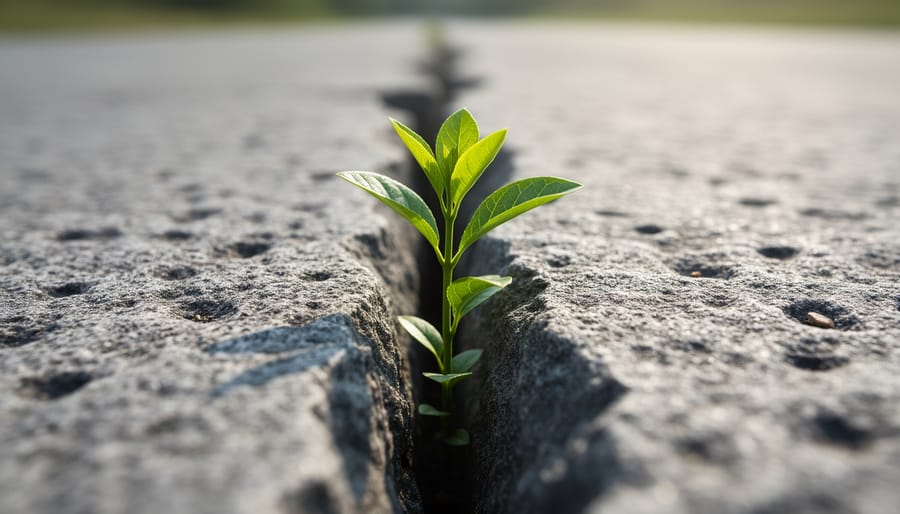
Existentialists invite us to look directly at life’s hardest truths: we will all die, we will experience failure and suffering, we will witness injustice that defies easy explanation. Rather than turning away or seeking comfort in preordained cosmic plans, existentialism asks us to sit with what Albert Camus called the absurd, the gap between our human need for meaning and the universe’s indifference to that need. This confrontation is not pessimism for its own sake. It’s a clearing of the ground, an honest reckoning with mortality, injustice, and the absence of guarantees that anything we do ultimately matters in some cosmic ledger.
When traditional anchors like divine purpose or a fixed human nature dissolve, we’re left with a question: what meaning can be made? Existentialists argue that meaning isn’t discovered or handed down, it’s created through our choices and actions. You define yourself by what you do when the comfortable illusions fall away. That responsibility can feel overwhelming. Without a script or blueprint, every decision becomes significant, and every failure genuinely yours. But it’s also liberating. If existence precedes essence, then you’re not bound by inherited roles, cultural expectations, or metaphysical destiny.
For those exploring theosophical ideas, this resonates in unexpected ways. Theosophy emphasizes spiritual development as a conscious, individual journey, not passive adherence to dogma but active engagement with universal truths and self-transformation. Both existentialism and theosophy resist the idea that meaning is imposed from outside without personal participation. Where they diverge is in their starting assumptions. Theosophy speaks of cosmic order, karmic law, and the evolution of consciousness; existentialism often begins from the assumption that no such order exists prior to human action.
Yet this tension itself invites dialogue. Can you hold both the existentialist’s radical freedom and the theosophist’s sense of interconnected purpose? Does confronting absurdity sharpen or undermine spiritual inquiry? As you consider how existentialism intersects with your own path, notice where it challenges comfortable certainties and where it affirms your commitment to creating meaning despite, or perhaps because of, life’s inherent uncertainties.
Why Existentialism Isn’t a Unified School, and Why That Matters

Existentialism never aspired to be a tidy philosophical system with shared doctrines and a unified manifesto. It emerged instead as a mood or attitude during periods of cultural upheaval, particularly in post-war Europe, when traditional certainties about human nature and meaning collapsed. Philosophers, theologians, novelists, and playwrights all wrestled with existential questions, but they arrived at radically different conclusions.
Consider the spectrum: Jean-Paul Sartre insisted that the absence of God leaves us radically free and responsible for creating meaning ex nihilo, while Søren Kierkegaard rooted his existential anxiety in the individual’s relationship with the divine. Martin Heidegger rejected the existentialist label entirely, preferring phenomenological inquiry into being. Simone de Beauvoir extended existential freedom to feminist critique of constructed gender roles. These thinkers share concerns about authenticity, absurdity, and individual responsibility, yet their frameworks contradict each other in fundamental ways.
This lack of coherence isn’t a weakness. It reflects existentialism’s core insight that no single system can capture the lived complexity of human existence. Just as theosophy values diverse spiritual voices and cultural perspectives rather than demanding doctrinal uniformity, existentialism honors the irreducible particularity of each person’s encounter with meaning and freedom. The open, unfinished quality of existentialist thought invites ongoing dialogue across traditions.
This matters because rigid definitions can become prisons. When we treat existentialism as a fixed school, we miss how its questions travel across cultures and contexts. A Japanese philosopher grappling with nothingness, an African writer exploring identity under colonialism, a theosophist examining self-determination within cosmic order, all engage existential themes without subscribing to European frameworks wholesale. The looseness of existentialism as a category becomes liberating: it names a set of questions, not answers, allowing each community to explore freedom and meaning through its own lens.
Existentialism in Dialogue with Theosophy and Spiritual Inquiry

At first glance, existentialism and theosophy might seem like uneasy companions. Existentialism insists that we create meaning in an indifferent universe where existence precedes essence, while the basics of Theosophy point toward universal brotherhood, karmic law, and an ordered cosmos infused with spiritual purpose. Yet both traditions resist dogmatic answers handed down from above. Both challenge us to take responsibility for our spiritual development rather than passively accepting predetermined roles or inherited beliefs.
Theosophy emphasizes interconnectedness and the evolutionary journey of the soul across lifetimes, guided by principles like the true meaning of karma. Existentialism, by contrast, focuses relentlessly on the individual’s radical freedom and the absence of cosmic guarantees. Where theosophy sees a lawful unfolding toward unity and enlightenment, existentialist thinkers like Sartre confront meaninglessness head-on, asserting that humans must define themselves through action without reliance on divine blueprints or universal essence.
Still, these tensions open fertile ground for dialogue. Both reject the notion that human nature is fixed or that individuals should surrender agency to authority. Theosophy’s insistence that we co-create our destiny through ethical action and conscious growth echoes existentialism’s call to embrace responsibility for who we become. Neither tolerates complacency or passive fatalism.
Where existentialism confronts absurdity, theosophy offers frameworks for navigating suffering and injustice without abandoning hope for meaning. Where theosophy risks abstraction or cosmic detachment, existentialism insists we stay grounded in the lived reality of choice, anxiety, and the burden of freedom. Together, they invite us to hold paradox: individual agency within collective evolution, radical freedom alongside spiritual law, the courage to face meaninglessness while still seeking connection and purpose. This conversation enriches both traditions and asks each of us to consider how we balance self-creation with our responsibilities to the wider human family.
Practical Reflections: Living Existentially in 2026
Living existentially in 2026 means taking daily ownership of the freedom and responsibility that come when no cosmic blueprint dictates your purpose. Start where you are: notice the moments when you defer to external authorities, algorithms curating your feed, cultural scripts prescribing success, inherited beliefs you’ve never questioned. Existentialism asks you to pause and ask whether these reflect your authentic choices or convenient defaults.
Radical responsibility shows up in small acts. When you scroll past a crisis headline, you’re choosing indifference. When you stay silent in a meeting where injustice unfolds, you’re choosing complicity. Existentialism doesn’t moralize these choices, but it refuses the comfort of pretending they aren’t yours. This isn’t guilt-tripping; it’s reclaiming agency in a world that encourages passivity.
Modern absurdities demand existential courage. Technological disruption fragments our attention and commodifies connection. Ecological crisis confronts us with mortality and complicity on a planetary scale. Cultural fragmentation leaves us navigating contradictory values with no consensus map. These aren’t problems to solve once and forget, they’re conditions to confront daily, creating meaning through how we engage them rather than waiting for resolution.
Spiritual practices can deepen this work. Meditation, journaling, or psychoanalysis help surface the unconscious patterns where you’ve outsourced your choices. Theosophical inquiry into universal brotherhood adds dimension: your radical freedom exists alongside others’ freedom, and authentic meaning-making often emerges in community rather than isolation.
What does existential living look like in your cultural context? How do you confront absurdity while honoring interconnection? Share your reflections, this philosophy thrives in dialogue, not dogma.
Common Questions About Existentialism
Is existentialism just nihilism in disguise? Not quite. While existentialism acknowledges the absence of predetermined meaning, it doesn’t claim life is meaningless. Instead, it insists you create meaning through your choices and actions. Nihilism says nothing matters; existentialism says meaning matters precisely because you must forge it yourself. This distinction matters for spiritual seekers: existentialism doesn’t dismiss your search for purpose, it places that search squarely in your hands.
Can existentialism coexist with religious or spiritual belief? Absolutely. Though Sartre famously championed atheistic existentialism, thinkers like Kierkegaard and Marcel developed deeply religious versions. The core idea, that you must choose and commit to your beliefs rather than passively inherit them, applies whether you’re Christian, Buddhist, theosophist, or none of the above. Existentialism asks you to own your faith authentically, not simply follow tradition by rote. Many within theosophical communities find this emphasis on individual agency and authentic spiritual development complements their philosophy of inclusion honoring diverse paths to meaning.
What’s the difference between existentialism and absurdism?
Both confront life’s inherent lack of predetermined meaning, but absurdism (associated with Camus) emphasizes the conflict between human need for meaning and the universe’s silence, while existentialism focuses on creating authentic meaning through freedom and choice.
Do existentialist ideas apply across different cultures?
Yes, though European thinkers are most commonly cited, existentialist themes, confronting mortality, choosing one’s path, grappling with freedom, resonate globally. Indigenous, African, Asian, and Latin American philosophers have explored similar questions about existence, responsibility, and meaning within their own cultural contexts.
Is existentialism outdated or still relevant in 2026?
Existentialism remains vital whenever people face uncertainty, technological disruption, ecological crisis, or cultural fragmentation. Its tools for confronting absurdity and creating authentic meaning address timeless human challenges intensified by modern conditions.
How you engage these questions shapes your relationship with existentialism itself. There’s no single correct interpretation, and that openness invites ongoing dialogue across philosophical traditions and spiritual communities worldwide.
Existentialism remains vital in 2026 precisely because it refuses to offer comfortable certainties. Its core insight, that existence precedes essence, places radical responsibility in your hands: no predetermined script dictates who you must become or what you should value. Instead, you define yourself through the choices you make, the actions you take, and the meaning you create in the face of absurdity, injustice, and mortality. This philosophical attitude speaks directly to contemporary spiritual seekers navigating technological disruption, ecological crisis, and the dissolution of inherited frameworks, inviting each individual to confront freedom not as liberation but as the weighty task of self-creation.
For theosophical communities, existentialism offers both challenge and enrichment. Where theosophy explores universal brotherhood and cosmic order, existentialism insists on the individual’s irreducible freedom and the necessity of personal engagement with meaninglessness. These tensions need not be resolved but can provoke deeper inquiry: How does radical individual choice coexist with interconnectedness? Can we embrace both existential freedom and spiritual development across cultures? Such questions belong to community dialogue, not solitary reflection.
We invite you to contribute your own perspectives, how existentialist ideas intersect with your cultural background, spiritual practice, or lived experience. Share stories, pose questions, and engage critically with these concepts. Existentialism is not a doctrine to accept but a living attitude to explore, and your voice enriches this global conversation about meaning, purpose, and what it means to exist authentically in our time.